The lessons of companion planting and in counterpoint, the natural rivalries that transpire in botany through allelopathy represent a missed opportunity and a potential design tool. It seems to me that more research should be done in the realm of allelopathy in particular, as much can be learned here. This potential design tool / chemical process is a complex one, whereby a plant releases compounds into the soil or air to inhibit adjacent plantings and minimize competition. While we understand some of these relationships, we are just beginning to scratch the surface. Understanding more about both allelopathic and harmonizing horticultural relationships can help us to become better plant designers and create healthy and successful designs based more closely upon natural associations.
Rooted in the Greek term for "harm", allelopathy provides a common example in the Walnut tree. Here, the chemical secretion of the chemical "juglone" into the soil inhibits any other plant growth, in effect creating a natural weed barrier. Particularly effective against acidic plants such as Azalea, Birch or Pine, allelopathic chemicals reduce plant growth by interfering with a nearby plant's ability take in nutrient or perform cell division. These chemicals may also simply slow growth through by denying water or other nutrients. Plants can release these inhibitors through attached or fallen leaves, buds, flowers, roots or in support of a fungi or bacteria that in turn discharges the chemical. These chemical releases are typically juglone, cyanogenic glycoside, phenols, coumarins or terpenoides. Good drainage can minimize this kind of damage or conversely, assist in taking advantage of this effect, depending upon your orientation to it for your own particular plant layout.
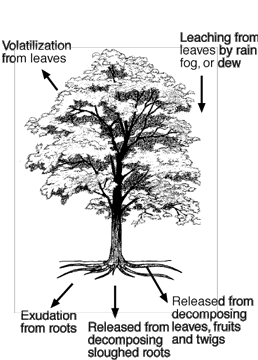
(From the Virginia Cooperative Extension)
Marigolds, Red clover, Brassicas and some grains provide an allelopathic resistance to insects, benefitting plants that surround them and providing a natural IPM approach for those that wish to minimize use of garden chemicals. Herbs that can inhibit surrounding plant growth include Artemisia and Fennel. Primroses, Peppergrass, Wormwood and Milkweed all inhibit adjacent plants. In addition, Laurel, Forsythia, Asters, Digitalis, Rhododendron , Kinnikinnik , Elderberry , Pine, Eucalyptus and some Maples also have allelopathic properties as do Sunflowers, in this case inhibiting nitrogen fixation as well.
In a 2008 online article, Robert Dailey lists some plants with allelopathic relationships:
Salt Cedar inhibits almost every other plant
Sugar maple inhibits Yellow Birch, White spruce
Hackberry inhibits Herbs, Grasses
Eucalyptus inhibits Shrubs, Herbs, Grasses
Black Walnut inhibits Pines, Apple, Birch, Black Alder, Hackberry, Basswood, Azalea
Juniper inhibits Grasses
Sycamore inhibits Yellow Birch, Herbs, Grasses
Oak inhibits Red Maple, Red Pine
Sassafras inhibits Elm, Silver Maple, Box elder
Balsam poplar inhibits Green Alder, Southern red oak, Sweet gum,
Laurel inhibits Black Spruce
Manzanita inhibits Herbs, Grasses
Bearberry inhibits Pine, Spruce, Sumac, Douglas fir
Elderberry inhibits Douglas fir
Forsythia inhibits Kentucky bluegrass, Goldenrod, Sugar Maple, Bl. Cherry, Tulip Poplar, Red Pine
How can we use this information? Beyond understanding PH and soil compatibility, knowing a plant’s allelopathic properties can help us determine the best fit in a mix of botanicals, ensuring that the plant materials that we want to protect get a desired “assist” and those that we wish to inhibit are denied growth. Understanding allelopathy will provide a natural support in minimizing weed growth as well…