Frequently, when I am measuring a home site to prepare a plan, I will have a conversation about what I do and how I do it. What is it that goes into the preparation of plans and proposals? How do you go about drawing up a property plan?
I was reading the special centennial issue of Landscape Architecture Magazine the other day and was fascinated by plans by landscape architect Tommy Church's and a 1921 photo of Fletcher Steele's "landscape architect's kit". Mr. Steele's list of handy in the designer field tools included:
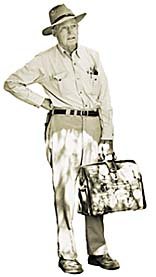
(Tommy Church)
A folding pocket Kodak' with an extra spool of film
Sheets of cross section paper
100ft. steel tape
Reflex compass
Day & night prismatic compass
Eureka steel tape repairers
Six inch hand level
100ft. of chalk line
Steven's line level
Rubber bands, paper clips, pen points, pocket leveling rod
Soil acidity indicator
2H, HB, 3B and 4H pencils
Matches
Architectural & engineering scales
The latest issue of Landscape Architecture 'to beguile weary hours on the train'
Two nursery catalogs
This list got me thinking about all the in-field measuring, drawing, marking and communication tools that I have used in my day, from charcoal pencils and cb radios in the good old days, to the laser levels and blackberry's of our digital age. At one point long ago I got a little carried away with my "kit", outfitting a conversion van with a drafting table and desk, a portable printer and fridge. In that bygone era I would pull off at a scenic spot and draft away while gabbing with the crew on the cb. I could swing open the rear doors to access a pull-out drawing easel, surveying paint and a variety of homeowner giveaway catalogs.
For the budding landscape designer, no Tommy Church satchel is complete without the basics of course:
A 100' or 200' tape measure
A roll of surveyor's marking tape (I prefer the biodegradable type)
A hand level (or the far more technical "clinometer")
Graph paper
A field notebook
Several pencils (and maybe even one that writes in the rain)
A compass (and a current declination chart)
Something to write on (clip board or field book)
A camera (digital, of course)
Personally, I prefer a leather toolbelt as well, the kind a carpenter might wear. You can put most of your stuff in it and keep your hands free to draw or carry your tripod easel. It's cumbersome and sometimes awkward to walk around a property, clanking about with easel, tapes and pad. But it's a necessary inconvenience...and after all, we do get to stop occasionally and smell the roses.